What to Check Before Installing a Solar Battery in NSW?

More homeowners are now considering a solar battery upgrade in 2026 than ever before. The reason is simple: electricity prices during the evening continue to rise, while solar export payments have dropped significantly across many NSW energy retailers.
In the past, many households benefited mainly from exporting excess solar energy to the grid. But with lower feed-in tariff NSW rates, homeowners are now more focused on storing and using their own solar power instead.
At the same time, changes to the federal’s cheaper home battery program after 1 May 2026 have made battery sizing and system compatibility more important than before.
This guide explains what actually matters before installing a battery in NSW, including solar compatibility, household electricity usage, incentives, battery sizing, and long-term value.
Why Solar Batteries Are Becoming More Popular in NSW
Solar-only systems are no longer delivering the same value they once did. While rooftop solar still reduces daytime electricity costs, export payments for unused solar power have steadily declined.
At the same time:
Evening electricity prices are increasing
More households work from home
Air conditioning demand is rising
EV charging is becoming more common
This is why solar self-consumption NSW has become a major focus. Instead of exporting cheap solar energy during the day and buying expensive electricity at night, battery-ready solar system allow households to store and use their own energy later.
Demand is growing particularly fast among homeowners adding a battery for existing solar systems.
What Changed After 1 May 2026?
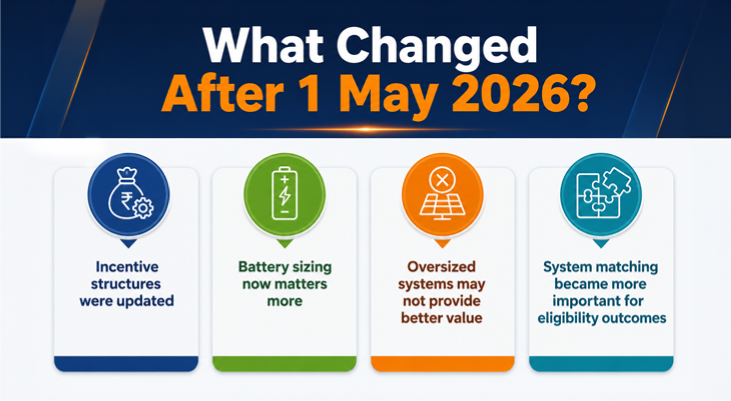
After 1 May 2026, battery incentives changed under the Federal Home Battery Program.
Key changes include:
Incentive structures were updated
Battery sizing now matters more
Oversized systems may not provide better value
System matching became more important for eligibility outcomes
This means homeowners now need to choose practical battery sizes based on real usage rather than simply installing the largest system available.
Batteries can still provide strong value after the update, but correct sizing is now far more important.
How STCs Relate to Battery Incentives
Federal battery incentives may now connect more closely with renewable energy incentive structures and solar battery eligibility NSW requirements.
In simple terms:
STC-related rules changed after 1 May 2026
Battery setup and compatibility now influence eligibility outcomes
Battery size and solar generation levels matter more than before
Homeowners do not need to understand certificate calculations in detail, but they should understand that incentive value now depends heavily on proper system matching.
Is There a Separate Solar Battery Rebate in NSW?
This is one of the biggest areas of confusion.
As of May 2026:
NSW does not offer a separate upfront battery rebate
Eligible households may still access federal’s cheaper battery incentives
Some households may receive additional support through Virtual Power Plant (VPP) programs
This means the available rebate for solar battery for NSW households depends on:
Battery setup
Solar system compatibility
Program participation requirements
Some homeowners searching for a solar battery NSW rebate assume there is a dedicated government home battery rebate NSW offers, but current support mainly comes through federal programs and VPP participation.
To know more about What to Check Before Installing a Solar Battery in NSW?


Comments